When a reefer container's refrigeration unit starts acting up mid-shipment, the difference between a quick fix and spoiled cargo often comes down to knowing which reefer machinery parts need replacing, and how fast a supplier in Singapore can get the right one to you. Compressors, evaporator fans, control boards, and sensors all fail differently, and guessing wrong wastes time you don't have. This guide covers the major components inside a reefer container's refrigeration system, the warning signs for each failure type, and how to decide between OEM and aftermarket reefer machinery parts before ordering through AML's reefer container spare parts service.
Understanding the Core Components of a Reefer Machinery Unit
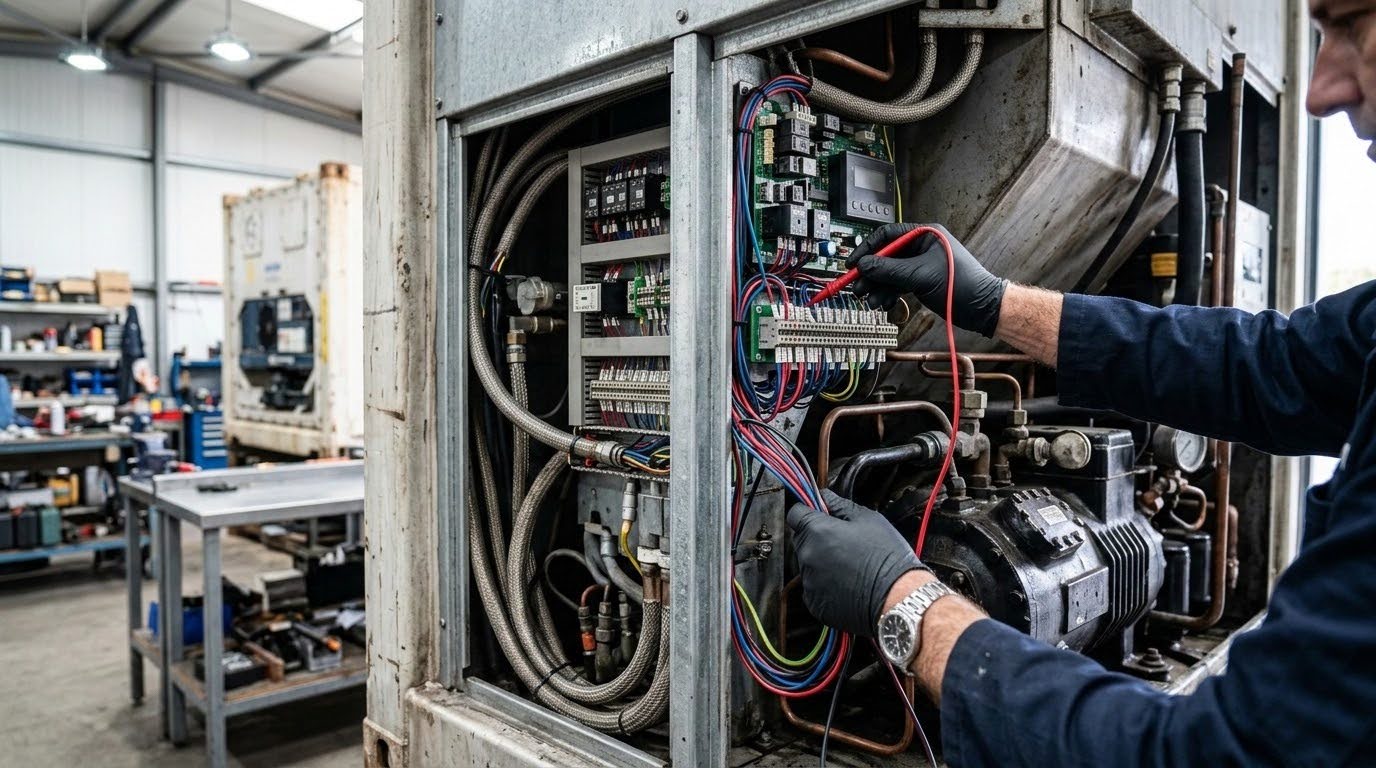
A reefer container's refrigeration system is built from a handful of components working together, and knowing what each one does makes diagnosing a fault far faster. The compressor is the heart of the system, circulating refrigerant and generating the pressure difference needed for cooling — when it fails, the unit typically stops cooling altogether. The condenser and evaporator coils handle heat exchange, and a blocked or damaged coil shows up as reduced cooling capacity before a full stoppage. ISO 1496-2, the international specification for thermal freight containers, requires these units to maintain consistent internal temperatures under test conditions, which is why a properly functioning control board matters as much as the mechanical parts. The control board reads input from temperature and humidity sensors and adjusts compressor cycling, defrost timing, and fan speed — a faulty board can cause erratic readings even when the mechanical components are healthy. Door gaskets, drain hoses, and defrost heaters round out the parts that fail less dramatically but just as often.
Common Failure Points and What They Look Like
Compressor Issues
A compressor rarely fails without warning. Listen for grinding, knocking, or short-cycling rather than a normal cycle. A unit that runs constantly without reaching set temperature, or trips its overload protector repeatedly, is often a compressor on its way out rather than a simple refrigerant leak. Because compressors are expensive to replace, have a technician confirm the diagnosis with pressure readings first — a control board fault can mimic compressor symptoms and requires different reefer machinery parts.
Control Board and Sensor Failures
Control board and sensor failures tend to show up as inconsistent readings rather than a total shutdown — a display showing a temperature that doesn't match what's inside the container, alarms triggering with no obvious cause, or defrost cycles running at the wrong intervals. These faults are trickier to diagnose because the unit may still sound and feel normal. A technician familiar with your unit's brand — commonly Carrier Transicold, Thermo King, or Daikin — will usually run a diagnostic scan first, since sensor and control board issues are frequently confused and require different reefer machinery parts.
Door Seals, Gaskets, and Drain Systems
Less dramatic but just as costly over time, worn door gaskets let humid Singapore air seep in, forcing the compressor to work harder and shortening its lifespan. Blocked drain hoses cause water pooling that can damage electrical components. These parts are inexpensive relative to a compressor or control board, which makes them easy to overlook during routine servicing — but neglecting them is one of the most common reasons operators end up needing a major repair sooner than expected.
OEM vs Aftermarket Reefer Machinery Parts
This is the question most operators ask once a fault is diagnosed, and the honest answer depends on the component. For compressors and control boards, OEM parts are generally worth the premium, since they're engineered to the unit's exact specifications, and a mismatched aftermarket part can cause repeat failures or void warranty coverage. For simpler components like gaskets and drain hoses, quality aftermarket parts can perform just as reliably at lower cost. The real risk with aftermarket isn't quality on average — it's inconsistency between suppliers, which makes a straight answer from your supplier more valuable than a blanket policy either way.
How to Match a Replacement Part to Your Unit
Ordering the wrong reefer machinery part because of a brand or model mismatch is one of the most common — and avoidable — delays in getting a container back in service. The ASHRAE Handbook's refrigeration chapter on marine container systems notes that compressor and control board mismatches are a leading cause of repeat service calls, which is why confirming the unit brand, model number, and serial number before ordering matters so much. These details are usually found on a data plate near the control panel. A supplier experienced across multiple reefer brands can often identify the correct part from a serial number alone. A photo of the data plate is usually enough to confirm compatibility before anything ships. See our [LINK TO: Post 19 — Reefer Container Repair Turnaround: What to Expect, From Diagnosis to Delivery] guide for how this fits into a typical repair timeline.
A Quick Reference for Common Reefer Machinery Parts
As a rough guide: compressors typically last 8 to 12 years, and OEM is strongly recommended given the cost of a repeat failure. Control boards last a similar period but are more sensitive to power surges. Evaporator fans and motors often need replacement every 3 to 5 years. Door gaskets should be inspected every service visit and typically replaced every 2 to 3 years in Singapore's humidity. Drain hoses and heaters are low-cost, high-frequency items best replaced proactively rather than waiting for a failure. These are general benchmarks, not guarantees.
Why Sourcing Locally in Singapore Matters
Singapore's climate is harder on reefer machinery than temperate conditions — heat and humidity accelerate wear on gaskets, corrode contacts faster, and push compressors harder year-round. MPA's guidelines for reefer container handling at local terminals note that plug-in and servicing infrastructure here is built around exactly this accelerated wear pattern. That makes local parts availability more than a convenience; it directly affects how long a container sits idle. Working with a technician experienced in reefer container repair and maintenance who stocks common parts locally can mean a same-week repair instead of a multi-week wait.
Frequently Asked Questions
How do I know if my reefer container needs a compressor replacement or just a repair?
A qualified technician can usually confirm this with pressure and amperage readings within an hour — symptoms like short-cycling or repeated overload trips are strong indicators, but a proper diagnostic avoids paying for a compressor when the real fault lies elsewhere.
Are aftermarket reefer machinery parts safe to use?
For lower-risk components like gaskets and drain hoses, yes, provided they come from a reputable supplier. For compressors and control boards, OEM parts are generally the safer long-term choice.
How long does it typically take to source a reefer machinery part in Singapore?
Common parts held in local stock can often be sourced within a day or two; less common components sourced from overseas manufacturers can take one to two weeks, which is why proactive servicing matters.
Can I service reefer machinery parts myself to save on maintenance costs?
Basic checks like gasket inspection are reasonable for an in-house team, but compressor, control board, and refrigerant work should always be handled by a licensed reefer technician, both for safety and to avoid voiding warranty coverage.
Does using genuine parts affect my container's resale or lease value?
Yes — a documented service history using OEM parts for major components is a meaningful factor for buyers or lessees evaluating a used reefer container's condition.
Getting It Right the First Time
Getting reefer machinery parts right the first time comes down to accurate diagnosis, knowing when OEM matters versus aftermarket, and working with a supplier who stocks common failure points locally rather than ordering blind. If your container is showing any of the warning signs above, AML's team can confirm the fault and source the right part fast. Get in touch with AML today for a diagnostic check and same-week parts sourcing wherever possible.
REFERENCES:
- International Organization for Standardization. (2018). ISO 1496-2:2018 Series 1 Freight Containers — Specification and Testing — Part 2: Thermal Containers. ISO. https://www.iso.org/standard/67326.html
- ASHRAE. (2022). ASHRAE Handbook — Refrigeration: Marine Refrigerated Container Systems. ASHRAE. https://www.ashrae.org/technical-resources/ashrae-handbook
- Maritime and Port Authority of Singapore. (2023). Port Marine Circulars — Reefer Container Handling Guidelines. MPA Singapore. https://www.mpa.gov.sg
