When a reefer container goes down, the question every operator asks first is simple: how long until it's back in service? The honest answer depends on what's actually wrong, but understanding the typical repair container process — from initial diagnosis through parts sourcing to final delivery — helps you plan around the disruption instead of being caught off guard. This walkthrough covers what a realistic repair timeline looks like for reefer containers operating in Singapore, using a real repair job as a reference point for what to expect at each stage of the process.
Stage One — Diagnosis
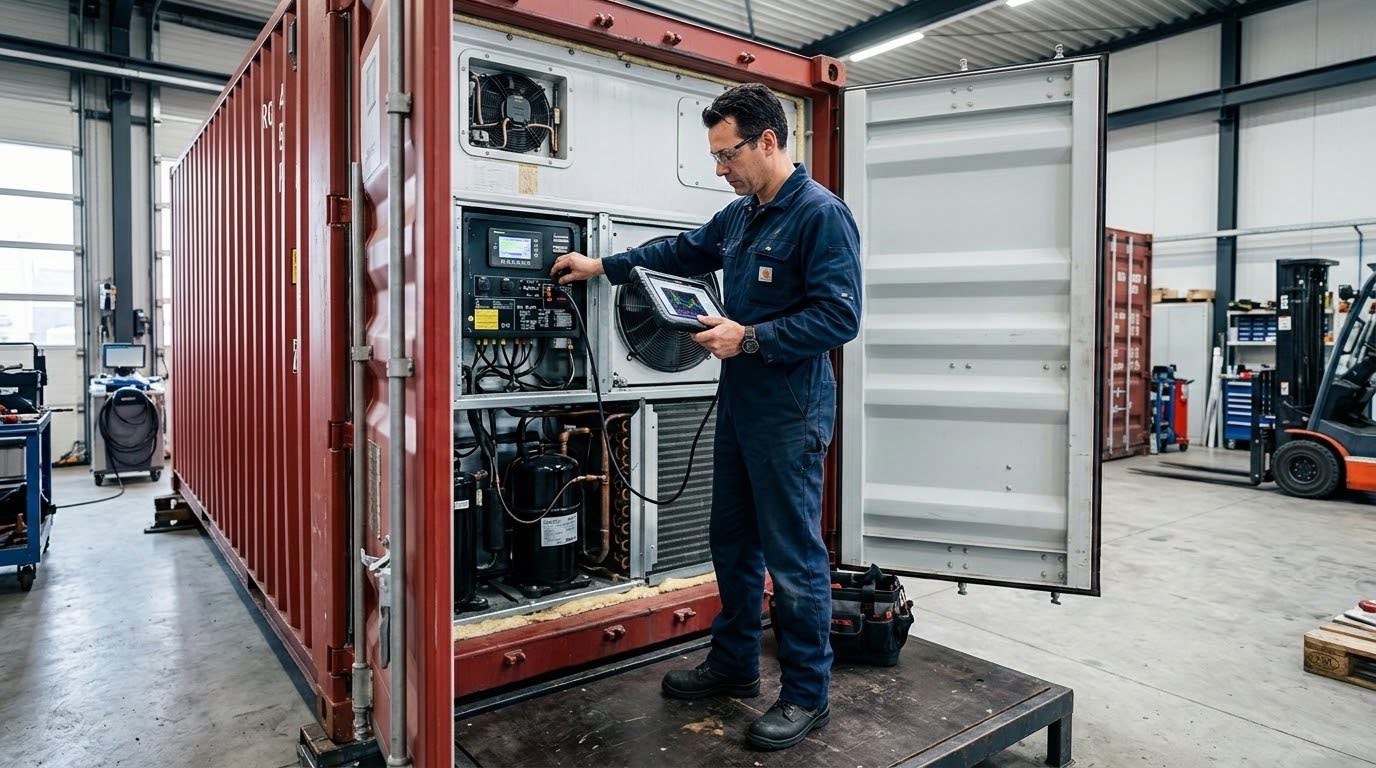
Every repair container job starts with an on-site or workshop diagnostic to confirm the actual fault rather than assuming based on symptoms alone. A technician will typically check compressor pressures and amperage draw, run a control board diagnostic scan, and inspect for obvious physical damage like gasket wear or refrigerant leaks — checks that align with the thermal performance testing criteria set out in ISO 1496-2 for freight thermal containers. This stage usually takes a few hours for straightforward faults, though intermittent electrical issues can take longer to reproduce and confirm. Getting the diagnosis right the first time matters because it determines which reefer machinery parts need ordering — a wrong initial diagnosis is one of the most common causes of extended repair delays, since ordering the wrong component means waiting for a return and a second, correct order before the repair can even begin.
Stage Two — Parts Sourcing
Once the fault is confirmed, the timeline shifts to sourcing the correct replacement part. See our Reefer Machinery Parts Buying Guide for more detail on how components are matched to a unit. Commonly needed reefer machinery parts — gaskets, sensors, contactors, drain hoses — are often held in local stock and can be fitted within a day or two. Less common parts, particularly major components like compressors for less common unit brands, may need to be ordered in and can extend the timeline by a week or more. This is where working with a supplier who stocks fast-moving parts locally, rather than ordering everything from overseas as needed, makes the biggest difference to overall turnaround. Operators with a fleet of containers can also reduce this bottleneck by keeping a small stock of the most commonly needed wear parts on hand themselves, rather than relying entirely on reactive sourcing after every fault.
Stage Three — Repair and Testing
With the part in hand, the physical repair itself is often the fastest stage of the process — a compressor swap or control board replacement typically takes a few hours for an experienced technician. What takes longer, and shouldn't be skipped, is post-repair testing: running the unit through a full cooling cycle, confirming temperature holds steady across the container, and checking that the fault hasn't recurred under load. Skipping thorough testing to save time is a common shortcut that leads to a repeat breakdown shortly after the container returns to service.
Stage Four — Delivery and Handover
Once testing confirms the repair has resolved the issue, the container is prepared for return to service, along with a written service report detailing what was found, what was replaced, and any recommendations for future servicing of reefer container units. This documentation matters for warranty tracking and for building a maintenance history that becomes useful when planning future preventive servicing rather than reactive repairs.
A Realistic Timeline Example
For a typical compressor fault involving a stocked replacement part, a realistic end-to-end timeline in Singapore runs roughly: same-day diagnosis, one to two days for parts sourcing where the part is in local stock, half a day for repair and testing, meaning a container can often return to service within three to four working days. This aligns with the operational turnaround expectations set out in the Maritime and Port Authority of Singapore's port marine circulars on reefer container handling at local terminals. More complex faults, or those requiring parts sourced from overseas manufacturers, can extend this to one to two weeks. Operators managing time-sensitive cargo should factor this range into contingency planning rather than assuming every repair will be resolved within a few days. It's also worth building a small buffer into any shipment schedule that depends on a container currently under repair, since even a well-run repair can be pushed a day or two by factors outside the workshop's control, such as a part shipment delayed at customs.
What Slows a Repair Down Beyond Parts Availability
Parts sourcing is the most visible bottleneck, but it isn't the only one. Access delays — a container tied up at a terminal, or awaiting release from a customs hold — can add days before a technician even reaches the unit. Incomplete documentation, such as a missing service history or an unclear description of the reported fault, can also slow the initial diagnosis stage, since the technician has less context to work from when narrowing down likely causes. Operators who keep a basic maintenance log for each container, even a simple record of past faults and servicing dates, tend to see faster diagnosis times because the technician isn't starting from zero.
How to Minimize Repair Turnaround Time
The single biggest lever operators have over repair timelines is proactive servicing — catching gasket wear, sensor drift, or early compressor strain during routine maintenance rather than waiting for a full failure. A second lever is choosing a repair partner who stocks common reefer machinery parts locally rather than sourcing them reactively after a fault is confirmed, which can cut days off an otherwise straightforward repair.
Frequently Asked Questions
How quickly can a reefer container be repaired in Singapore?
Straightforward faults with parts in local stock are often resolved within three to four working days; more complex issues can take one to two weeks depending on parts availability.
What's the most common cause of a reefer container breakdown?
Compressor and control board faults are among the most frequent major failures, though gasket and drain hose issues cause a larger number of minor performance problems over time.
Can I speed up a repair by supplying the part myself?
This is possible but risky — mismatched or lower-quality parts can cause repeat failures, so it's usually better to source through a technician who can confirm compatibility first.
Does regular servicing reduce the chance of a major repair?
Yes — routine servicing of reefer container units catches many issues, like gasket wear or sensor drift, before they escalate into a costly repair or full breakdown.
Will I receive documentation after a repair is completed?
A reputable repair provider should issue a written service report detailing the diagnosis, parts replaced, and any recommendations for future maintenance.
Planning Around Downtime
Knowing what to expect at each stage of a repair container job helps you plan around downtime instead of being caught off guard by it. If your reefer container needs diagnosis or repair, AML's technicians can confirm the fault and get the right reefer machinery parts moving fast. Contact AML today for a repair assessment. A well-documented repair history also pairs naturally with the kind of preventive care outlined in our reefer machinery parts buying guide, giving operators a clearer picture of when a component is approaching the end of its useful life rather than waiting for it to fail entirely — and for fleets managing several containers at once, that documented history becomes a useful planning tool for scheduling proactive servicing before the next fault occurs.
REFERENCES:
- International Organization for Standardization. (2018). ISO 1496-2:2018 Series 1 Freight Containers — Specification and Testing — Part 2: Thermal Containers. ISO. https://www.iso.org/standard/67326.html
- Maritime and Port Authority of Singapore. (2023). Port Marine Circulars — Reefer Container Handling Guidelines. MPA Singapore. https://www.mpa.gov.sg
