Introduction
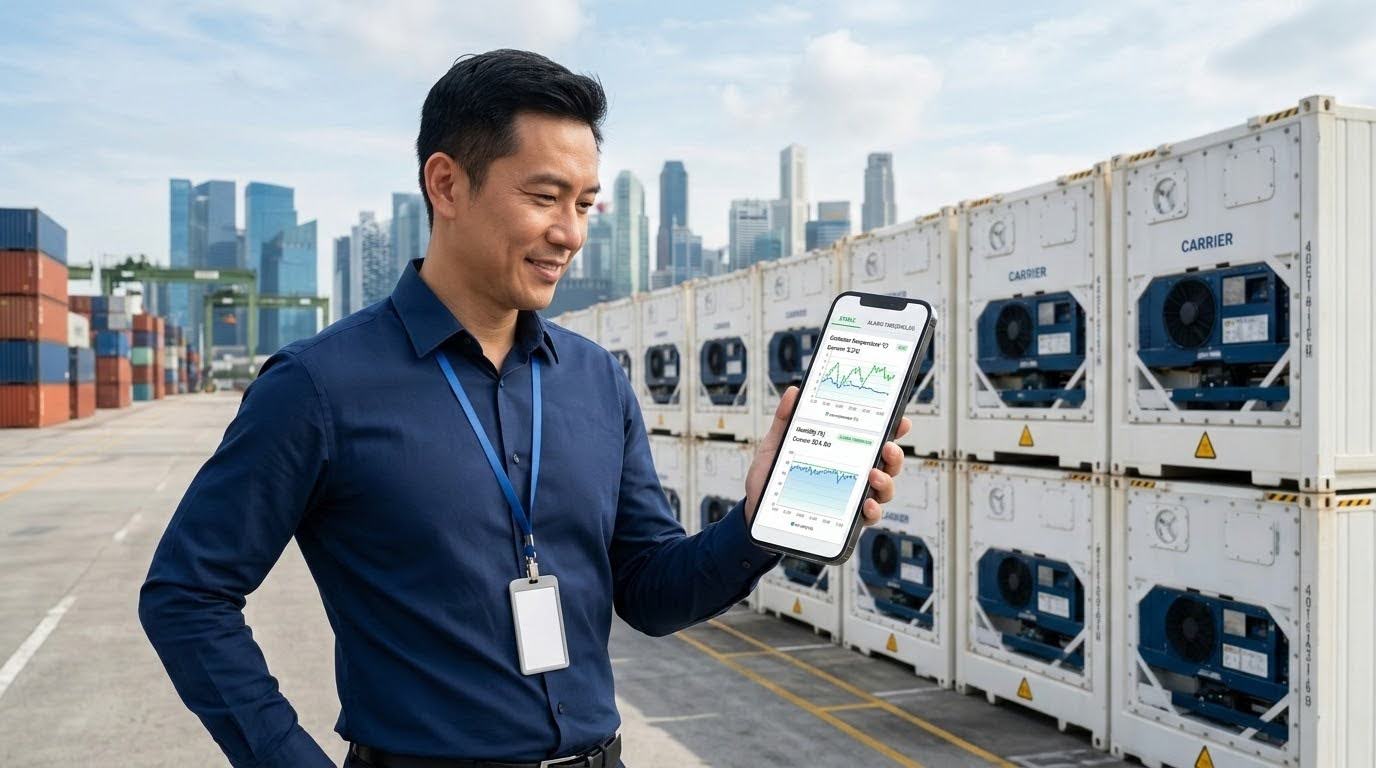
Manual temperature checks — walking to the container, opening the door, reading the controller display — are no longer sufficient for modern cold chain management. Pharmaceutical shippers require continuous temperature records for GDP compliance. Food operators face SFA audit requirements that demand documented temperature histories. Insurance underwriters increasingly ask for monitoring data before covering high-value perishable cargo. AML's remote monitoring for reefer containers system delivers real-time visibility across your entire reefer fleet — whether your containers are at a Singapore port depot, a cold store facility, or on a vessel transiting the Strait of Malacca.
How Wireless Reefer Monitoring Works
AML's monitoring system uses a combination of IoT sensors and a 4G/LTE cellular gateway mounted inside or near the reefer container. Here is how each component functions:
| Component | Function |
|---|---|
| Temperature sensor (probe) | Measures air temperature at evaporator inlet and near cargo — logged every 1–15 minutes (configurable) |
| Humidity sensor | Tracks relative humidity inside the container — critical for pharmaceutical and fresh produce cargo |
| 4G/LTE gateway | Transmits sensor data to the cloud platform via Singapore's cellular network (Singtel, StarHub, M1) |
| GPS module | Records container location — updated every 5–30 minutes depending on subscription tier |
| Cloud dashboard | Web and mobile interface — shows live data, historical graphs, alert history, and downloadable reports |
| Alert engine | Sends SMS, email, or push notifications when temperature or humidity exceeds user-defined thresholds |
Singapore Network Coverage Considerations
Singapore's 4G/LTE coverage from Singtel, StarHub, and M1 is comprehensive across the island, including Tuas Port, Jurong Island, Changi Airport Logistics Park, and most industrial zones. However, operators should be aware of specific connectivity considerations:
- Below-deck vessel positions: cellular signal is attenuated or lost when containers are stacked deep in a ship's hold — data is buffered locally and uploaded when the vessel reaches port and the container returns to surface coverage
- Remote port anchorages: vessels anchored at Eastern Anchorage or Western Anchorage may have reduced signal — AML can advise on satellite-capable gateway upgrades for extended offshore deployments
- Enclosed warehouses: thick concrete walls can reduce signal strength — AML engineers assess signal quality during installation and position the gateway antenna for optimal reception
Key Use Cases for Singapore Operators
Pharmaceutical and Life Sciences
HSA's GDP guidelines require continuous temperature records for all cold chain movements. AML's system produces PDF and CSV data exports directly from the dashboard — ready for GDP audit submission without any manual transcription. For clinical trial shipments, chain-of-custody GPS records are included in the same report.
Fresh Food and Seafood Logistics
Singapore's wet markets, supermarket distribution centres, and restaurant supply chains handle enormous volumes of temperature-sensitive seafood, produce, and chilled meats daily. Real-time alerts allow logistics managers to act immediately when a reefer door is left ajar, a unit trips off, or ambient heat penetrates during a particularly hot delivery day.
Port and Transhipment Operations
For containers transiting through Singapore to regional destinations, monitoring provides full visibility during the plug-in and unplug windows at the terminal. Temperature excursions during these transitions — when the container is moved from shore power to vessel power — are a known risk point that proactive monitoring eliminates.
Comparing Subscription Models
| Feature | Basic Plan | Premium Plan |
|---|---|---|
| Monitoring interval | 15 minutes | 1 minute |
| Temperature + humidity | Yes | Yes |
| GPS location | Every 30 minutes | Every 5 minutes |
| SMS/email alerts | Yes | Yes + push notifications |
| Data history retention | 3 months | 24 months |
| Data export (PDF/CSV) | Manual | Automated scheduled reports |
| Multi-unit dashboard | Up to 5 containers | Unlimited |
Cost vs Spoilage Risk Analysis
A monthly monitoring subscription cost per container is a fraction of the value of a single cargo loss event. Consider:
- Average value of a 20ft pharmaceutical reefer load: SGD $50,000–$500,000+
- Average value of a 40ft frozen seafood load: SGD $30,000–$150,000
- Insurance deductible for temperature excursion claim: typically SGD $5,000–$25,000
- Monthly monitoring cost per container: a small fraction of any of the above figures
Beyond cargo protection, monitoring data has proven value in insurance claims (demonstrating due diligence), customer dispute resolution (showing exact temperature history during transit), and SLA compliance reporting for 3PL operators.
Setting Up Alerts: Best Practices for Cold Chain Managers
An alert system is only as useful as the thresholds it monitors. Setting alerts too wide means excursions go undetected; setting them too tight generates alert fatigue and causes teams to ignore notifications. Recommended alert configurations for common cargo types in Singapore:
| Cargo Type | Recommended Alert Threshold |
|---|---|
| Pharmaceutical (2–8°C) | Alert at ±1°C from setpoint — zero tolerance for excursion |
| Fresh seafood (0–2°C) | Alert at +3°C — immediate action required |
| Chilled produce (4–8°C) | Alert at +10°C — investigation required within 1 hour |
| Frozen goods (-18°C) | Alert at -15°C — defrost issue or door event likely |
Integration with Preventive Maintenance Workflows
Remote monitoring data becomes even more valuable when integrated with a proactive maintenance and repair of reefer containers schedule. Unusual data patterns are often early indicators of impending component failure. For example:
- Longer pull-down times to setpoint — may indicate refrigerant loss or condenser coil fouling
- Increased defrost cycle frequency — suggests excessive moisture infiltration, pointing to a door seal failure
- Wider temperature swings around setpoint — indicates compressor cycling issues or expansion valve problems
- Humidity spikes without door events — may indicate a door gasket failure on a secondary panel seal
By flagging these patterns proactively, operators can schedule maintenance visits before a breakdown occurs — keeping the container in service and avoiding emergency repair call-out premiums.
Frequently Asked Questions
Q1: Can AML's monitoring system work on containers from other suppliers?
Yes. AML's monitoring hardware can be retrofitted to any reefer container regardless of brand or supplier. Installation takes approximately 2–3 hours per unit.
Q2: What happens to monitoring data if cellular connectivity is lost?
The gateway buffers data locally during connectivity loss and uploads all buffered records automatically when connectivity is restored. No data is lost during signal outages.
Q3: Can I monitor containers across different Singapore locations from one dashboard?
Yes. The cloud dashboard supports multi-location, multi-unit monitoring from a single login. Containers at Tuas, Changi, and Jurong can all be monitored simultaneously.
Q4: Is the monitoring system suitable for cold rooms as well as containers?
Yes. AML installs the same sensor and gateway technology in modular cold rooms, walk-in chillers, and cold storage facilities. The dashboard consolidates all assets in one view.
Q5: How is monitoring data used for SFA or HSA compliance?
The dashboard generates downloadable temperature logs in PDF and CSV formats, with timestamps and equipment ID. These are accepted as documentation for SFA food licensing inspections and HSA GDP pharmaceutical audits.
Stop relying on manual checks. AML's wireless monitoring system gives you real-time visibility of every reefer container in your fleet — from anywhere, on any device. Contact us to discuss a monitoring solution for your operation. Enquire with AML today.
