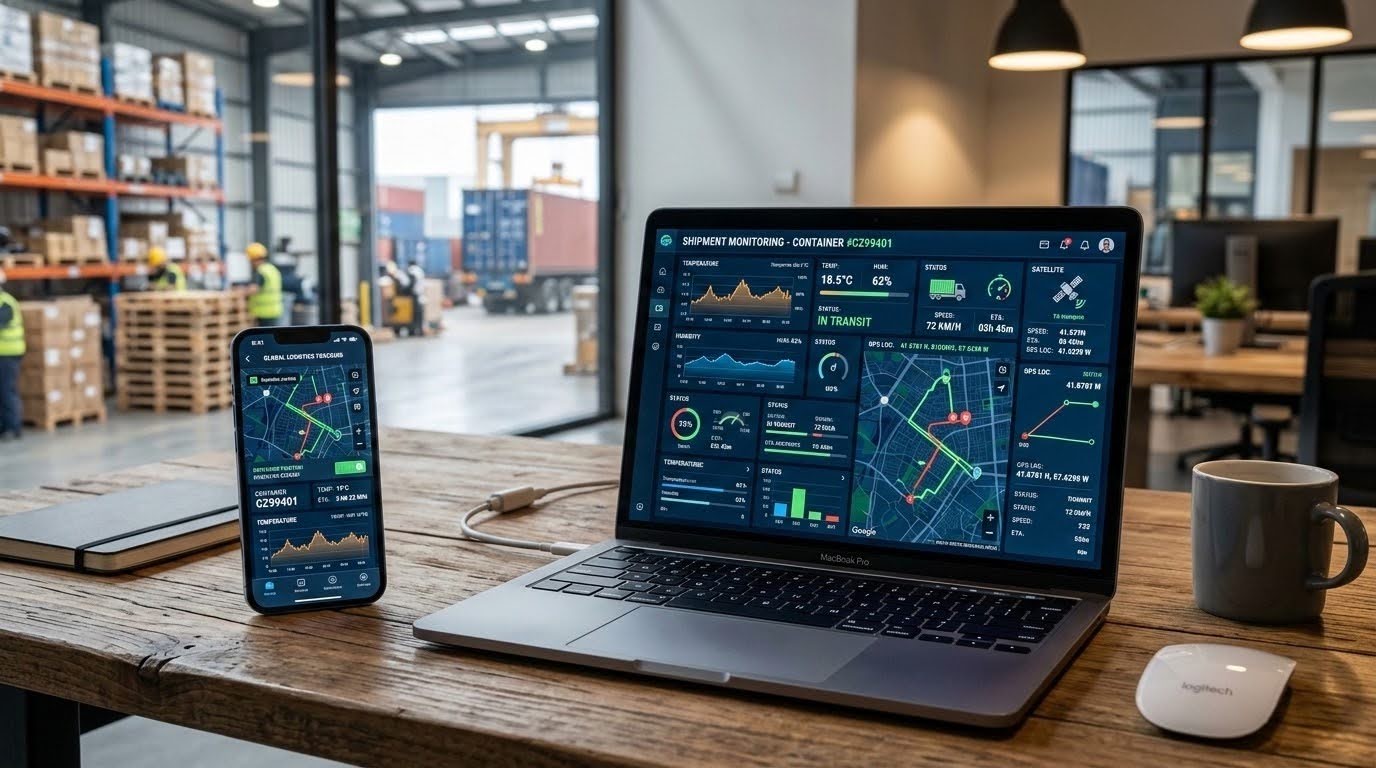
Manual temperature checks — a driver noting a reading at each stop, a warehouse worker glancing at a display once a shift — feel like they're doing the job, right up until a deviation goes unnoticed for hours and an entire shipment of temperature-sensitive cargo has to be written off. Remote monitoring for container systems change that equation by replacing periodic manual checks with continuous, real-time visibility across the whole journey. This piece looks at what that shift actually costs versus what it saves, using a real spoilage-incident comparison to make the case for operators still relying on manual checks or basic temperature loggers alone.
The Real Cost of a Single Spoilage Incident
A single spoiled shipment can easily run into tens of thousands of dollars once you account for the cargo value, disposal costs, and the reputational cost of a delayed or failed delivery to a customer — particularly for pharmaceutical or fresh produce cargo where temperature excursions can render an entire load unsellable rather than merely reduced in quality. The frustrating part is that many of these incidents are preventable: a temperature deviation that goes unnoticed for six or eight hours because no one happened to check the reading during that window is exactly the failure mode that real-time monitoring is designed to close. Beyond the immediate cargo loss, a spoilage incident involving a client's goods can also damage a long-term commercial relationship in a way that's harder to quantify but often more costly than the shipment itself.
What Remote Monitoring for Container Actually Does
Unlike a passive temperature logger, which records data for review after the fact, a remote monitoring for container system transmits live temperature, humidity, and in many cases location data continuously throughout transit or storage, and pushes an alert the moment a reading moves outside the acceptable range — not hours later when someone happens to review the log. The International Institute of Refrigeration's guidance on cold chain technology identifies this shift toward continuous, real-time monitoring as one of the most significant improvements in cold chain reliability over the past decade. This shift from reactive record-keeping to proactive alerting is the core difference in value between a basic temperature logger and a true remote monitoring setup, and it's the difference that actually prevents spoilage rather than just documenting it after the fact.
Quantifying the ROI
Consider a rough comparison: a wireless remote monitoring subscription for a single reefer container typically costs a small fraction of the value of the cargo it protects over a year of use, particularly for higher-value refrigerated container shipments like pharmaceuticals or premium perishables. Against that recurring cost, even a single prevented spoilage incident — the kind caused by an unnoticed temperature drift that real-time alerting would have caught within minutes — can outweigh several years of monitoring fees. For operators running multiple containers, the calculation scales similarly: the system doesn't need to prevent every possible incident to pay for itself, just the ones that would otherwise slip through the gaps in a manual-check routine. Framed as a cost-per-container-per-month figure rather than a lump annual subscription, the decision becomes easier to justify against a single shipment's cargo value, particularly once a business has experienced even one spoilage incident that a real-time alert would plausibly have caught in time.
Where Remote Monitoring Pays Off Fastest
The clearest ROI cases are shipments where the cargo value is high relative to the monitoring cost — pharmaceuticals, premium fresh produce, and specialty chemicals are common examples — and where transit involves multiple handoffs between parties, since each handoff is a point where a manual check might be skipped or delayed. Long-haul or multi-leg shipments benefit more than short local deliveries simply because there's more time for an unnoticed deviation to cause real damage before anyone checks a reading.
Beyond Spoilage Prevention: Additional Value
Real-time data also creates a documented history that's useful for insurance claims, customer assurance, and compliance reporting — rather than relying on a driver's memory of conditions during transit, operators can produce a continuous record showing the cargo stayed within range throughout. The Maritime and Port Authority of Singapore's port marine circulars on reefer container handling reference this kind of continuous documentation as best practice for terminals and operators managing temperature-sensitive cargo. For businesses serving pharmaceutical or premium food clients, this documentation is increasingly becoming an expectation rather than a differentiator, making remote monitoring for container shipments as much about meeting customer requirements as preventing loss. Pairing monitoring with proactive reefer container repair and maintenance further reduces the chance that an alert ever needs to be raised in the first place.
What to Look for in a Monitoring System
Not all remote monitoring for container systems offer the same level of visibility, so it's worth comparing options on a few practical points before committing to one. Alert responsiveness matters most — a system that pushes a notification the moment a reading drifts out of range is far more valuable than one that only updates every few hours. Coverage reliability across Singapore's mobile networks, battery life for longer transit routes, and how easily historical data can be exported for reporting or client-facing documentation are all worth confirming with a provider before installation, rather than discovering gaps in coverage once a container is already in transit and it's too late to switch providers mid-shipment.
Making the Case Internally
For operators weighing whether to invest in remote monitoring for container fleets, the strongest internal case is usually built on a single documented near-miss or past spoilage incident, converted into a rough dollar figure and compared directly against the annual monitoring cost for the fleet. This kind of straightforward comparison tends to be far more persuasive to decision-makers than general claims about improved visibility, since it puts the ROI in terms that map directly onto the business's own risk exposure.
Frequently Asked Questions
How much does remote monitoring for a reefer container typically cost?
Costs vary by provider and feature set, but subscriptions are generally structured as a manageable recurring fee per container, well below the value of the cargo they protect.
Is remote monitoring only worthwhile for high-value cargo?
It delivers the fastest ROI for high-value or temperature-sensitive cargo, but any operator moving perishable or regulated goods can benefit from reduced spoilage risk.
What's the difference between a temperature logger and remote monitoring?
A temperature logger records data for review after the fact; remote monitoring transmits live data and sends immediate alerts when readings move out of range.
Can remote monitoring data be used for compliance or insurance purposes?
Yes — continuous logged data provides a documented record of conditions throughout transit, which is useful for both compliance reporting and insurance claims.
Does remote monitoring require special equipment on every container?
Yes, a monitoring unit needs to be installed on each container, though most systems are designed for straightforward retrofit onto existing reefer containers.
Running the Numbers for Your Fleet
The math on remote monitoring for container shipments is straightforward once you weigh the recurring cost against even a single prevented spoilage incident. If you're currently relying on manual checks or a basic temperature logger, it's worth running the numbers for your own cargo value and shipment frequency rather than deferring the decision until after the next incident. Contact AML to find out how our wireless remote monitoring system can be fitted to your reefer container fleet, and how quickly it typically pays for itself given your cargo type and shipment volume.
REFERENCES:
- International Institute of Refrigeration. (2020). Cold Chain Technology and Real-Time Monitoring Guidance. IIR. https://iifiir.org v
- Maritime and Port Authority of Singapore. (2023). Port Marine Circulars — Reefer Container Handling Guidelines. MPA Singapore. https://www.mpa.gov.sg
