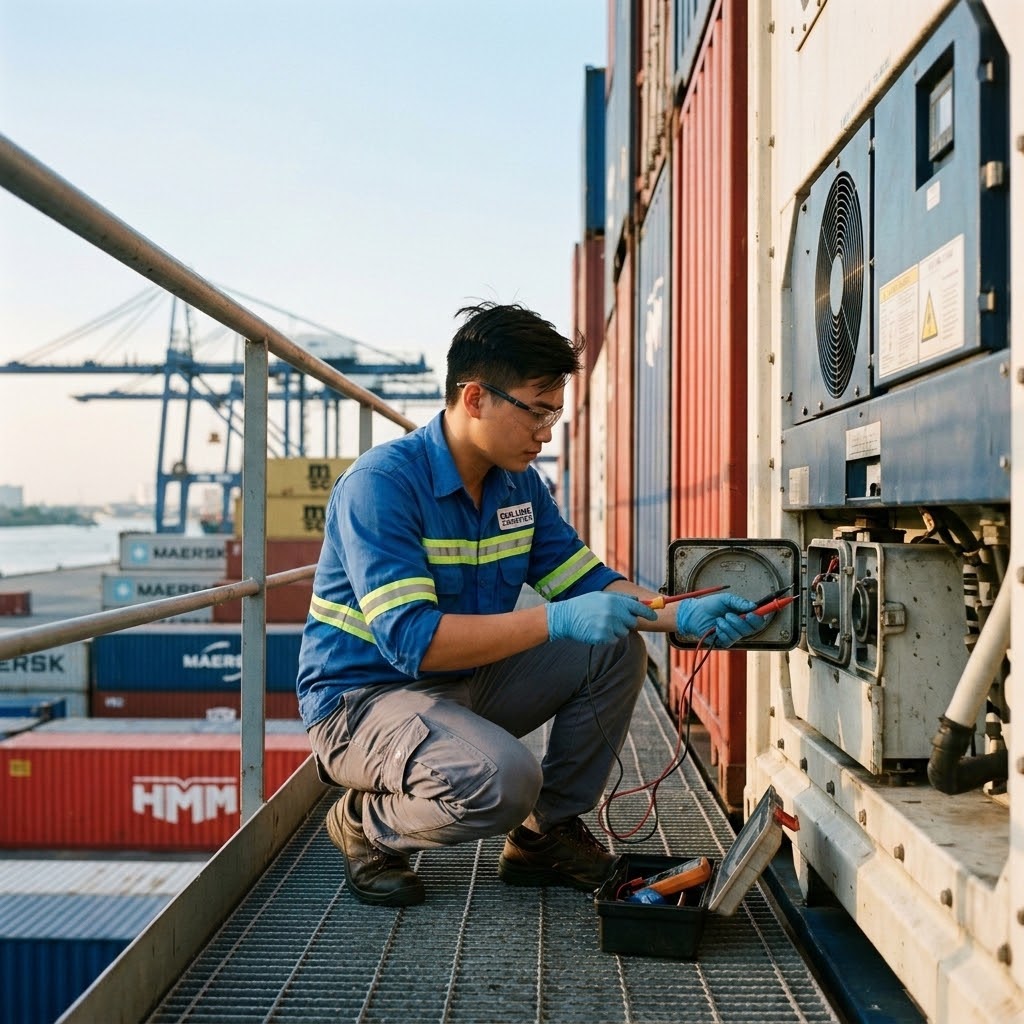
What Is a Reefer Socket?
A reefer socket (also called a receptacle unit or reefer plug-in point) is the electrical connection point that supplies power to refrigerated containers while they are stored in a port terminal, depot, or warehouse yard.
Key components include:
- Socket housing — Protects internal connections from weather exposure
- Electrical contacts — Transmits 380-460V AC power to the container refrigeration unit
- Circuit breaker — Prevents electrical overload and short circuits
- Monitoring system — Tracks power consumption and alerts operators to faults
When a reefer container is plugged into a functioning socket, its refrigeration unit maintains precise temperatures. When the socket fails, the container runs on backup battery – typically lasting only 30 minutes to 2 hours before cargo begins warming.
Why Reefer Socket Maintenance Matters for Singapore Ports
Singapore's ports handle over 37 million TEUs annually, with thousands of refrigerated containers plugged in at any given time. The Maritime and Port Authority of Singapore enforces strict cold chain standards to protect cargo integrity.
Consequences of Socket Failure
A single reefer socket failure can trigger cascading problems:
- Temperature excursion — Spoilage of food, vaccines, or pharmaceuticals within hours
- Alarm delay — Late detection means irreversible cargo damage
- Unplanned downtime — Missed vessel schedules result in demurrage fees
- Liability disputes — Legal questions about who pays for lost cargo
Real-world example: A single reefer socket failure on a container of frozen seafood at -18°C can cause over $50,000 in product loss within 4 hours.
Common Reefer Socket Failures
Corroded Contacts
Cause: Salt air exposure in coastal port environments
Warning signs: Intermittent power delivery, visible arcing marks on contacts
Loose Wiring
Cause: Vibration from nearby container handling equipment
Warning signs: Overheating terminals, melted wire insulation
Cracked Housing
Cause: UV damage or physical impact from straddle carriers
Warning signs: Visible cracks in outer casing, water ingress
Tripped Circuit Breaker
Cause: Electrical overload or short circuit condition
Warning signs: No power to socket, breaker reset button popped out
Water Ingress
Cause: Failed gaskets or compromised seals
Warning signs: Rust inside socket housing, green corrosion on contacts
Preventive Maintenance Checklist
Daily Visual Inspection
- No visible cracks or damage to socket housing
- Plug contacts appear clean and free of discoloration
- No standing water inside or around socket
- Power indicator light shows active status
Weekly Electrical Testing
- Measure voltage at socket terminals (380-460V AC)
- Check ground continuity with multimeter
- Test circuit breaker trip function
- Inspect for unusual heat buildup during operation
Monthly Deep Maintenance
- Open socket housing and clean contacts with electrical contact cleaner
- Apply dielectric grease to prevent corrosion
- Tighten all terminal screws to manufacturer specifications
- Replace damaged gaskets or seals
- Verify monitoring system communication
Quarterly Professional Servicing
- Thermal imaging inspection to detect hot spots
- Insulation resistance testing of all circuits
- Calibration of monitoring sensors
- Comprehensive repair of flagged issues
AML's Reefer Socket Maintenance Services in Singapore
As a specialist in refrigerated container solutions since 2005, Advance Marine & Logistics offers comprehensive plug-in maintenance services for port operators, depots, and logistics companies across Singapore and the Far East region.
Our Service Offerings
- Socket inspection and testing — Full electrical and visual assessment
- Contact cleaning and repair — Corrosion removal, contact replacement
- Housing replacement — Cracked or damaged units swapped out
- Monitoring system integration — Real-time alerts for socket faults
- Emergency breakdown response — 24/7 support for cargo-critical failures
The Cost of Neglect vs. Investment in Maintenance
- No preventive maintenance: $50,000–$200,000+ in cargo claims and operational downtime
- Basic in-house inspection: $5,000–$15,000 per year
- Professional servicing contract with AML: $15,000–$40,000 full coverage with 24/7 emergency response
Frequently Asked Questions
How often should reefer sockets be professionally serviced?
At minimum, every 3 months. High-traffic ports benefit from monthly professional servicing.
Can my own electrician service reefer sockets?
Yes, if certified for 400V AC systems. AML specialists have cold chain domain expertise that general electricians may lack.
What is the typical lifespan of a reefer socket?
With proper maintenance: 5–8 years. Without maintenance: 1–2 years before major component failure.
Does AML sell replacement reefer sockets?
Yes — AML stocks genuine reefer socket components for all major brands including Carrier, Thermo King, and Daikin.
Keep Your Port-Ready Reefer Sockets in Top Condition
Reach our team at sales@aml.sg or via WhatsApp: +65 8268 3359.
Enquire with us today at https://aml.sg
